

Solar just got cooler: sun now powers Snowplanet’s slopes
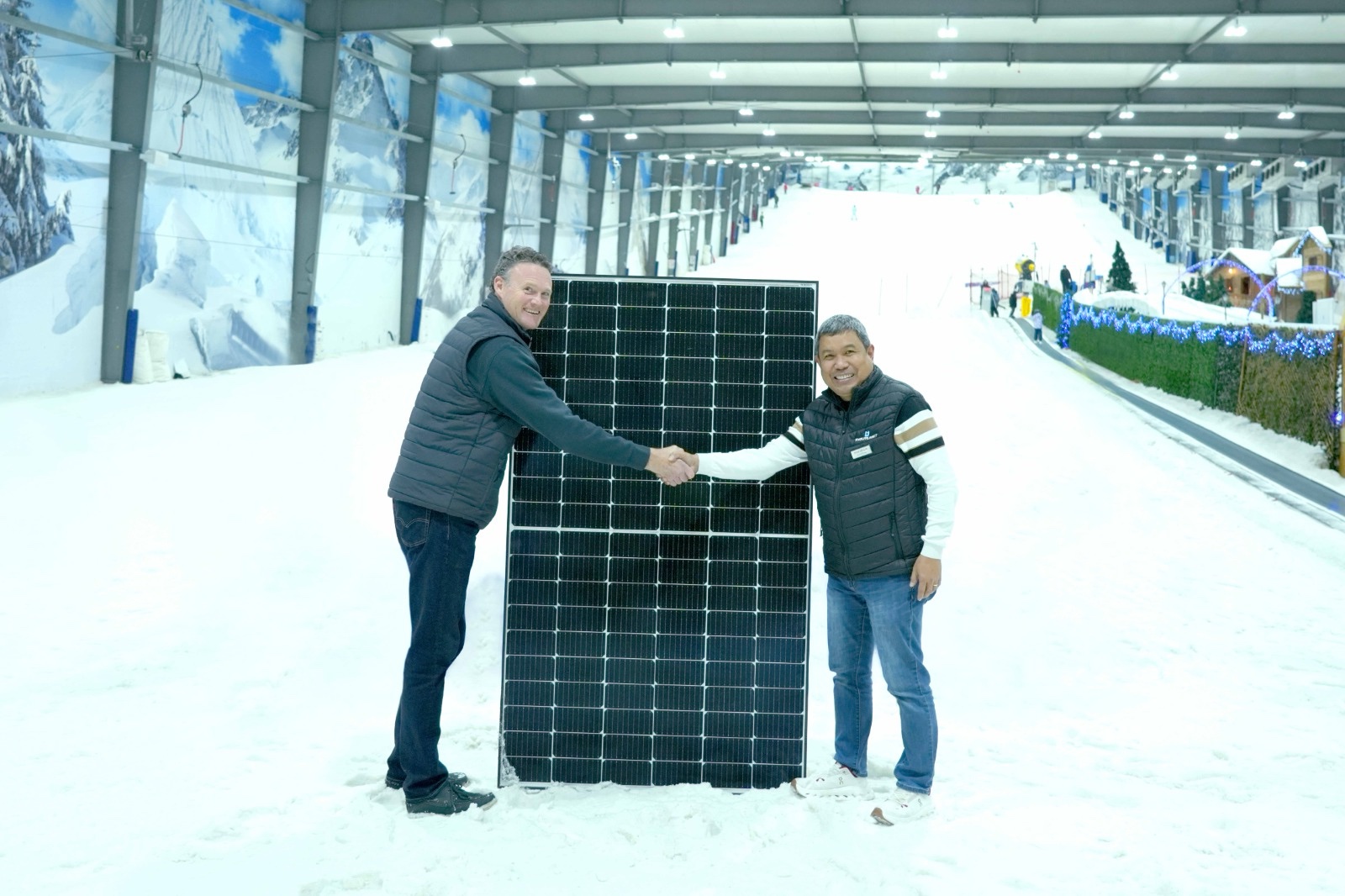
Auckland’s Snowplanet has partnered with one of NZ’s leading commercial solar company, Sunergise, to complete a 1.05-megawatt solar installation, cutting the facility’s grid energy reliance by approximately 30 percent.
Keeping Australasia’s only operating indoor ski venue cool takes energy. The Silverdale facility operates 24 hours a day, holding its 8,000 square metres of slope at a temperature of minus five degrees. To maintain constant ski-able levels of snow, Snowplanet has to produce another 80 cubic metres of fresh snow every week.
Snowplanet makes its snow at night, when the facility is closed. But the primary driver of demand for energy is not just making snow, it’s keeping the facility– in engineering terms, a large high-tech freezer– cold through even the hottest days.
The solar system offsets daytime consumption, reducing the total electricity the site needs to purchase from the grid. On the sunniest summer days, when the slopes need the most cooling power and the panels are generating at their peak, the system produces more electricity than the facility can use. That surplus flows back to the grid.
The new system features 2,317 ground-mounted panels on the hillside adjacent to the facility. Visible from Auckland’s Northern Motorway, the installation will generate roughly 1,500 megawatt-hours of electricity per year.
“Keeping the slopes frozen and ensuring a smooth experience for our customers, elite athlete training and school programmes takes around-the-clock power,” says Rojie Aguilar, General Manager of Snowplanet. “Cutting 30 per cent of our grid draw reduces our operational costs too.”
“The commercial logic is clean,” says Paul Makumbe, CEO of Sunergise. “The hottest summer days are when Snowplanet’s cooling demand peaks, which matches our maximum solar generation. The project offsets 101 tonnes of carbon annually without requiring any upfront capital from Snowplanet.”
Engineers opted for a ground-mounted system because the facility’s roof already carries 150 tonnes of load, and penetrating the waterproof membranes posed a structural risk. The hillside placement allowed Sunergise to orient the panels for optimal year-round output.
The project was completed under Sunergise’s SunPlus™ Power Purchase Agreement. Sunergise retains ownership and maintenance responsibilities, while Snowplanet purchases the electricity at a fixed rate below standard grid prices.

Niue Cuts Diesel Use by 1.2 million Litres a Year with New Solar & Battery System
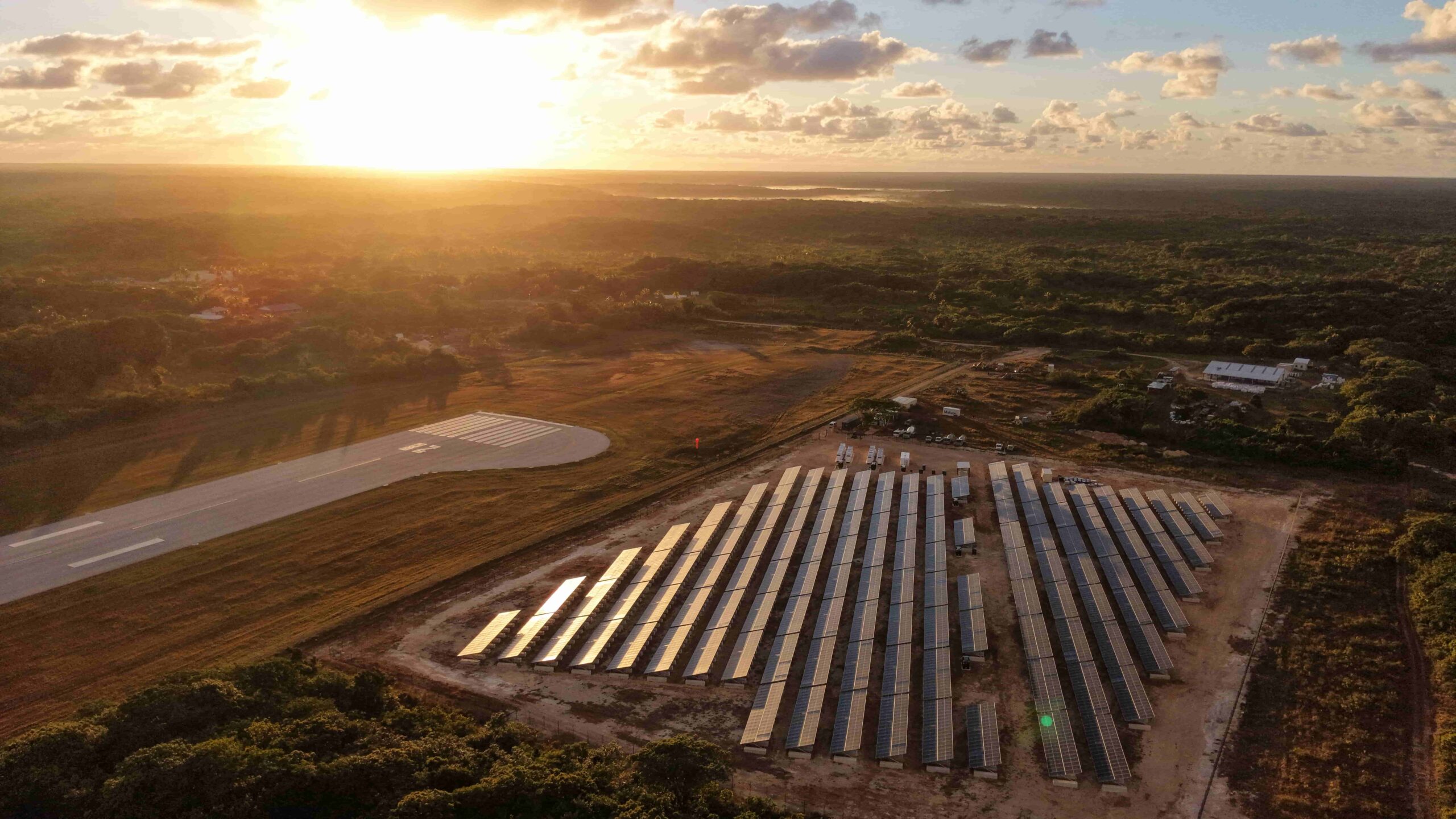
Niue’s reliance on diesel generators has significantly reduced from 24/7 operation to just 2-3 hours a day thanks to a new solar and battery system officially opened today, supported by the New Zealand Government and installed by Sunergise. The 2.79 MWp solar and 8.19 MWh battery energy storage system (BESS) forms a central pillar of the country’s goal of generating 80% of its electricity from renewable sources by 2030 and is now slashing around $4,000,000 NZD per year in diesel costs, directly strengthening Niue’s economic resiliency and development.
Diesel Dependency Is a Pacific-Wide Vulnerability
Like most remote atoll nations, Niue has relied almost entirely on costly fuel deliveries. Diesel that must be shipped in is vulnerable to global price swings and supply chain disruptions that can trigger fuel-related blackouts and leave entire communities without power.
The renewable energy project directly addresses that risk, marking a major step toward Niue’s energy resilience and giving the island’s approximately 1,800 residents one of the biggest solar capacities per capita in the Pacific.
Proving What’s Possible on Remote Islands
Building solar infrastructure on a coral atoll is nothing like building it on the mainland, like in New Zealand. Niue’s uneven, rock-hard terrain required extensive preparation before a single foundation could be poured. With challenging ground conditions on-site, structures were anchored using locally sourced concrete and engineered to withstand cyclone-force winds. The project, built beside Niue International Airport, took over a year to complete, reflecting the complexity of delivering utility-scale renewable infrastructure in one of the world’s most remote locations.
Sunergise CEO Paul Makumbe says the project highlights a wider shift taking place across the region:
“Every Pacific Island faces its own version of this challenge with geographic remoteness, outsized exposure to climate risk and complex solar installation conditions. What we’ve proven in Niue is that these barriers aren’t a reason to wait. Renewable energy expansion across Pacific nations is possible and can be accelerated.”
“I’m proud of the work the team has put into completing this outstanding project, with our excellent site supervisor, Will, working closely with the local community throughout, sharing skills, and enhancing local capability along the way”, Paul adds.
A Small Nation, an Outsized Result
The completed system, featuring 4,536 JA Solar panels and an 8.19 MWh Sungrow storage battery, will generate 5,186 MWh of clean electricity annually while offsetting 407,992 kg of CO₂ every year. The system fully integrates with the grid and existing BESS units on the island.
For a small nation of approximately 1,800 people, every litre of diesel no longer imported strengthens the country’s ability to reinvest in healthcare, education, and community wellbeing.
A Partnership for Pacific’s Energy Future
The project was delivered in partnership with the Government of Niue and the New Zealand’s Ministry of Foreign Affairs and Trade (MFAT).
On 23 July 2026, the system was officially handed over to the Government of Niue in a ceremonial opening event, marking a significant milestone in Niue’s journey towards renewable energy.
Vulcan Powers Up with Aluminium Industry’s Largest Rooftop Solar by Sunergise
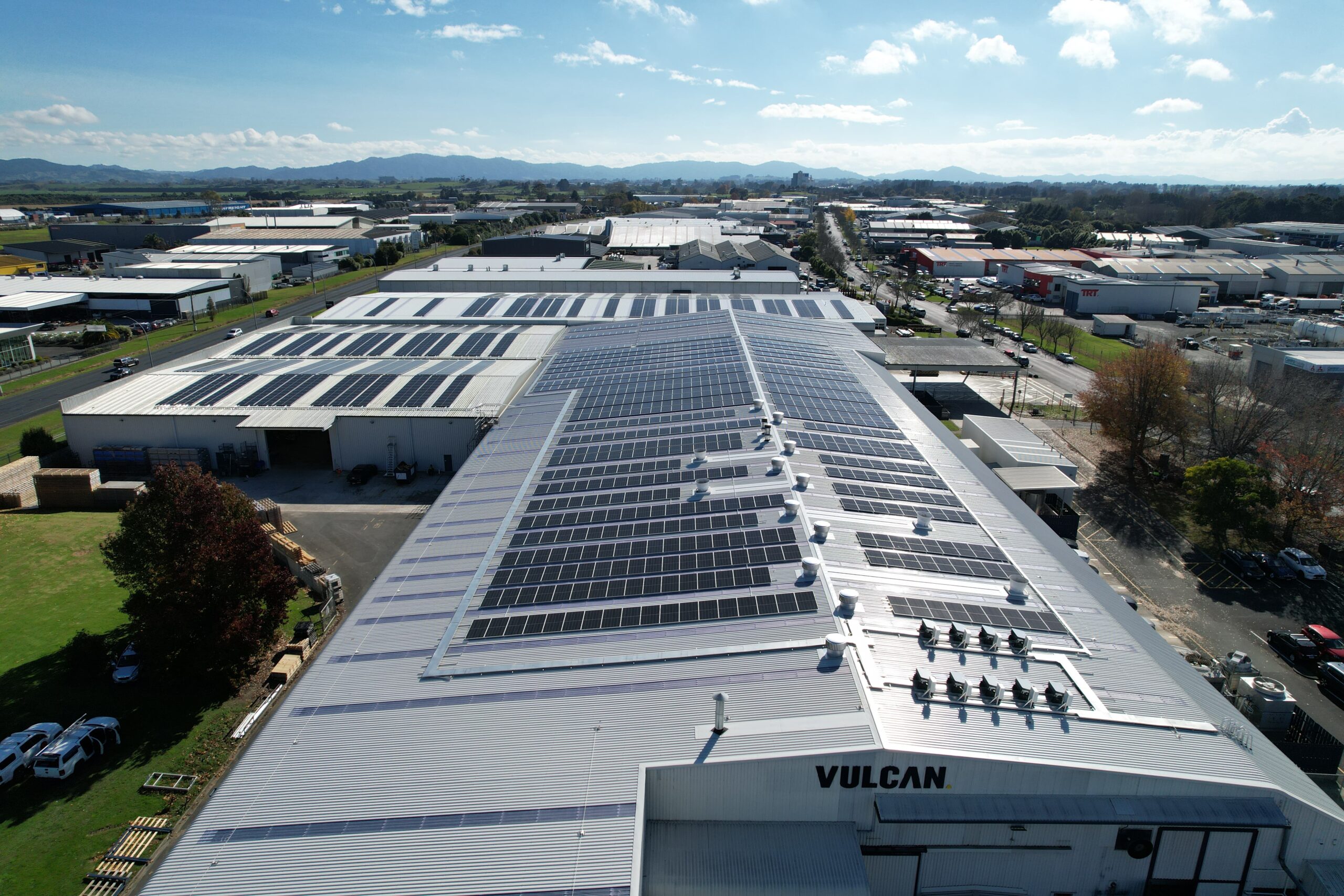
Vulcan, one of New Zealand’s leading aluminium extrusion processors, has commissioned the aluminium industry’s largest rooftop solar installation in NZ, partnering with Sunergise, to power its Hamilton facility with clean, on-site generated electricity.
The 1.17 MWp installation allows Vulcan to directly power its aluminium processing operations with renewable electricity, cutting the carbon footprint of its processed aluminium by more than 35%.
For Vulcan, the investment reflects a broader strategic shift toward greater control over its energy future. Zubair Khan, Vulcan’s Commercial Leader, says:
“We are proud to have installed the largest rooftop system in NZ’s aluminium industry. While the emissions reductions are significant, the real value lies in building a more resilient and secure energy strategy for the future. This investment reduces our exposure to market volatility and strengthens the long-term sustainability of our operations.”
A key enabler of the project was Vulcan’s decision to adopt Sunergise’s SunPlus™ Power Purchase Agreement (PPA). Under this model, Vulcan pays for the solar energy generated by the system, with no upfront capital expenditure allowing the company to accelerate its decarbonisation journey while Sunergise manages system performance, operation and maintenance.
Low-Carbon Supply Chain Innovation
The project also showcases Vulcan’s own manufacturing capability. The mounting rails for the solar panels were designed and extruded at Vulcan’s Hamilton extrusion facility, the same site where the installation now sits using low-carbon aluminium billet sourced from Tiwai Point Aluminium Smelter. The result is a project that reduces embodied carbon across the supply chain, from raw material to finished infrastructure, entirely within Vulcan’s own operations.
Sunergise CEO Paul Makumbe highlighted the deeper systemic innovation behind the project:
“What makes this installation unique is the way materials were rethought at every stage. It demonstrates how we can rely on local partnerships and locally sourced materials to build renewable infrastructure in NZ by reducing dependence on carbon-intensive imports from overseas.”
This approach reflects a broader shift toward industrial symbiosis, where manufacturing and renewable energy systems are increasingly integrated to reduce emissions across entire value chains.
Transforming Energy Use in Aluminium Extrusion
By generating a significant share of its own operational energy demand on-site, Vulcan is reshaping how energy is consumed in aluminium processing and supporting the production of some of the lowest-carbon extruded aluminium products in New Zealand.
The system is expected to produce more than 1,400 MWh of clean electricity annually, enough to power more than 200 homes and offsetting approximately 134 tonnes of CO₂ per year.